 Bo Frese
Most people use AI backwards — asking it for answers instead of bringing it their ideas. The real unlock is using it as a thinking partner that challenges you.
Read35 years inside the machine
The product is the point.
Not the process. Not the methodology. Not the roadmap. The thing that ends up in the hands of real people, solving a real problem. That's the only measure that matters. Everything else is in service of that.
Building it well — with quality, with people who can vouch for what they shipped, and close enough to the people using it to know it actually matters — is harder than it looks. That's what I work on.
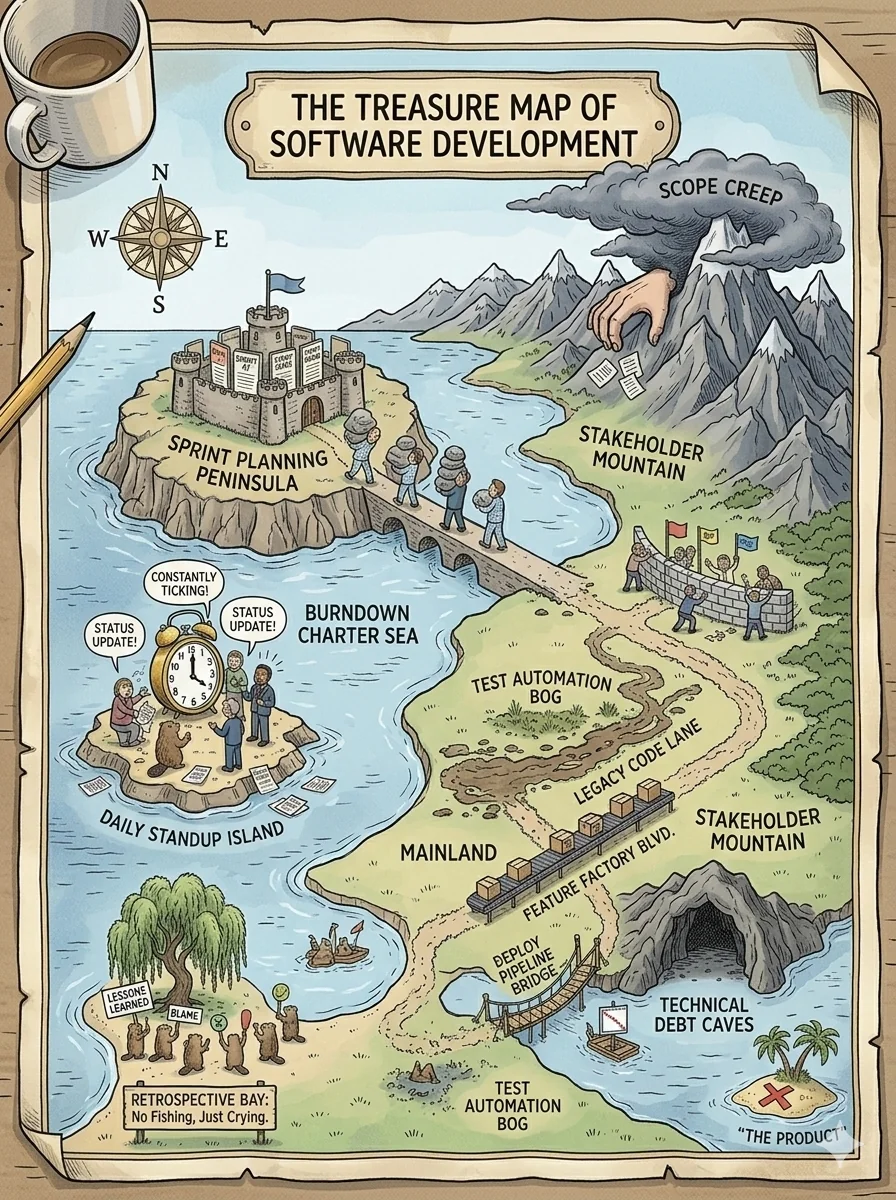
The Treasure Map of Software Development
The same pressure. Every organisation.
Move faster. But don't break things.
Every organisation feels it. And most try to solve it by fixing one piece — the process, the technology, the team structure, or now AI. Each fix is locally sensible. None of them work on their own.
- How you're organised shapes what you can build.
- How you build shapes what's possible to change.
- How you adopt AI shapes whether it helps or quietly accelerates the debt you already have.
- The quality of what you ship today determines how fast you can move tomorrow.
Most organisations treat these as separate problems. They aren't. I've spent 35 years at every level of that system — developer, architect, team lead, startup founder, organisational coach — and I still write production code. That range is what makes it possible to see how the parts connect, and say honestly what's blocking the whole.
Building the right thing badly doesn't scale. Building the wrong thing well doesn't either.
— Bo Frese
Three ways I can help
Depending on where the pressure is and where you're ready to start, there are three kinds of work I take on. Different entry points into the same conversation.
01
Advisory
When the structure, the process, or the way business and development work together is getting in the way. Diagnosis first — then stay and work through what it surfaces.
How this works →
02
AI
When you want to move faster with AI without losing ownership of what gets built. The talk, the course, and hands-on advisory — grounded in what it actually takes to do this with discipline.
How this works →
03
Development
When you need a developer who codes with the full picture in their head — the users, the business goals, and the architecture, not just the ticket.
How this works →Featured article
AI Is About to Make Your Technical Debt Problem Much Worse
Most organisations already carry more technical debt than they can handle. AI is about to accelerate the problem significantly — unless you address the underlying quality culture first.
Read the article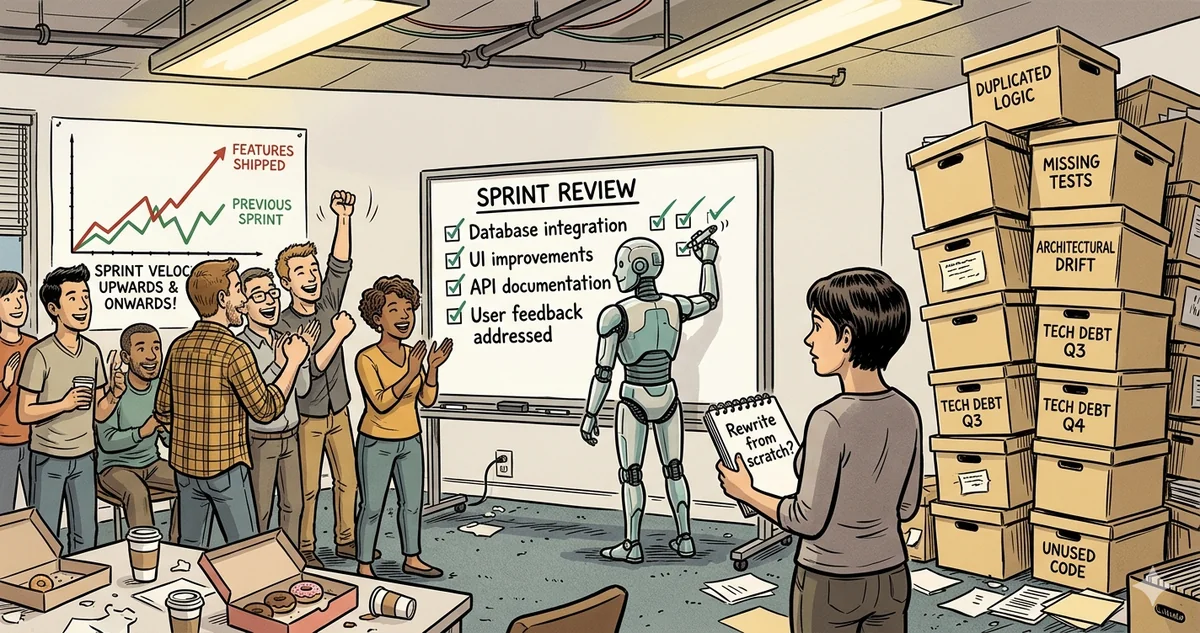
Recent thinking
All articlesWhen I ask who owns whether the product is genuinely good, the answer is always some version of "everyone." Everyone means no one.
ReadThe ceremonies are happening. The Scrum Masters are trained. PI planning runs every quarter. And yet nothing has fundamentally changed.
Read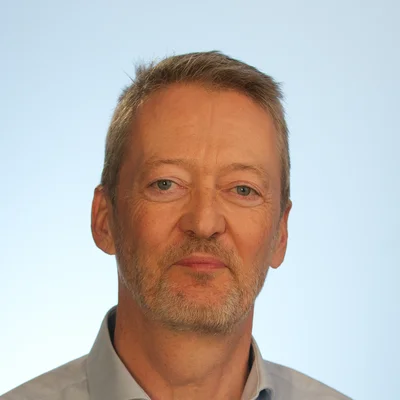
About Bo
The advisory and the technical.
Not separate jobs.
I started building software in 1987, with users down the hall and full ownership of everything I shipped. That instinct — seeing developers, users, business, and code as one connected thing — has never left. 35 years and many large organisations later, I still write the code.